Skip to content Skip to cookie consent
Skip to content

Research reports

Women, Peace and Security in South Sudan

Research report providing independent analysis of women’s roles in peacebuilding, prevention, protection, and recovery

2025 Available in English

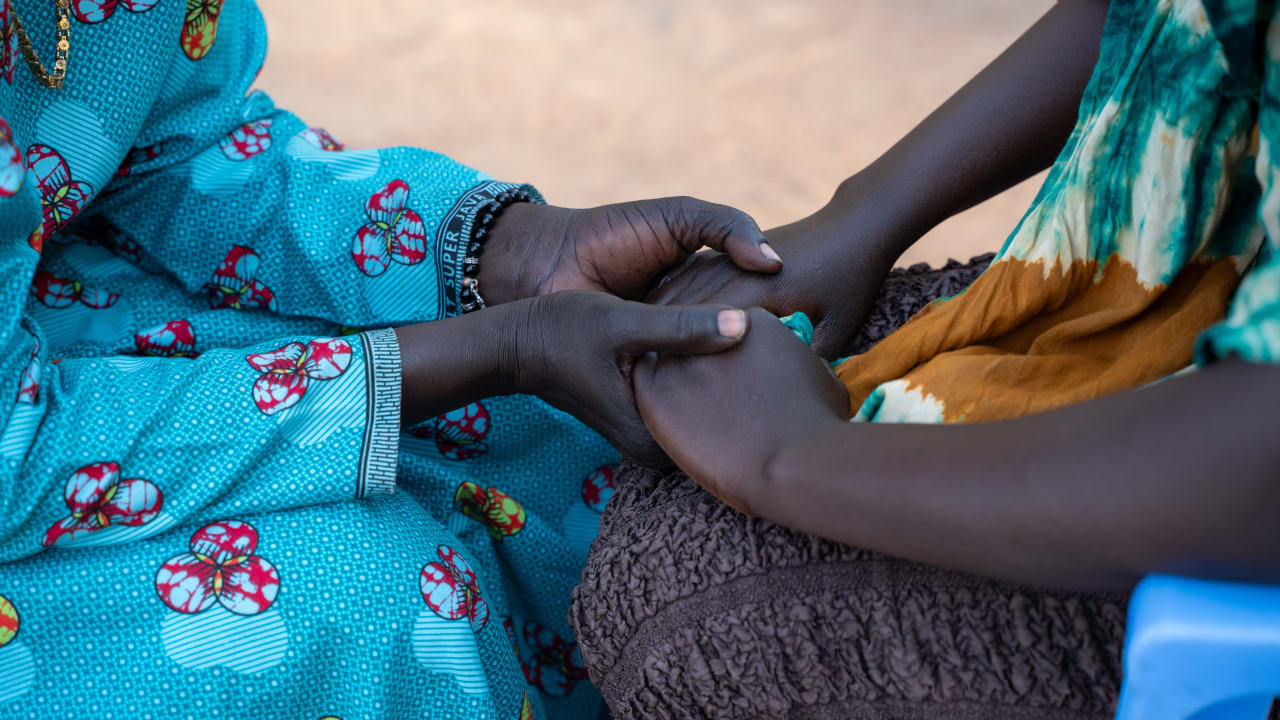
Women in South Sudan during a counseling session

This study, commissioned by Tearfund, aims to assess the progress, challenges, and opportunities in advancing the WPS agenda in South Sudan, providing evidence-based recommendations for policy and programmatic interventions. Specifically, it sought to assess progress across the four pillars of prevention, participation, protection, and relief and recovery, identify the roles of key actors including government institutions, CSOs, FBOs, and international organisations, examine challenges hindering women’s participation in peacebuilding, and document best practices and lessons to inform future strategies.

Key findings

Efforts to advance the Women, Peace, and Security (WPS) agenda in South Sudan have been driven by government institutions, civil society organisations (CSOs), international and local NGOs, faith-based organisations (FBOs), and community-based structures. These stakeholders have played a vital role in policy advocacy, peacebuilding, gender-based violence (GBV) prevention, and economic empowerment, contributing to women’s participation in decision-making and post-conflict recovery.

Conclusions

The implementation of the WPS agenda in South Sudan has provided valuable insights into effective strategies, persistent challenges, and key priorities for future interventions. While women’s participation in governance, peacebuilding, and economic empowerment has expanded, their full inclusion remains hindered by cultural resistance, economic barriers, and weak policy enforcement.

Key best practices have emerged, including women-led peace mediation efforts, gender-sensitive conflict prevention strategies, economic empowerment programmes, and faith-based advocacy. Local women’s groups have played a pivotal role in grassroots peacebuilding, conflict resolution, and community stabilisation, ensuring reconciliation efforts are inclusive and sustainable. The integration of livelihood initiatives, vocational training, and microfinance has strengthened women’s financial independence, contributing to household resilience and reducing vulnerability to GBV.

However, gaps remain in institutional coordination, funding allocation, and policy enforcement. The need for stronger accountability mechanisms, multi-stakeholder collaboration, and sustainable financial support has been identified as critical to maximising the WPS agenda’s impact.

Tearfund is well-positioned to leverage its faith-based networks and community-driven approach to address these challenges by scaling up best practices, enhancing local leadership, and promoting gender-sensitive policies.

Priority areas for intervention based on primary and secondary data include Juba, Twic East, Bor, Malakal, Renk, Wau, Terekeka, Aweil, and Torit, where Tearfund can focus on leadership development, GBV prevention, economic empowerment, and faith-based peacebuilding initiatives. Partnerships with government institutions, INGOs, and donors will be essential in mobilising resources and ensuring programme sustainability.

Moving forward, achieving sustainable peace and gender equality will require a holistic and well-coordinated approach, ensuring that women’s voices are not only included but actively shape decision-making.


The women, peace, and security agenda (WPS) is a global framework that is adopted by the United Nations Security Council with Resolution 1325(2000) and its subsequent resolutions. The resolution recognised the disproportionate and unique impact of armed conflict on women and girls, and it calls for the adoption of a gender perspective to consider the special needs of women and girls during conflict, repatriation and resettlement, rehabilitation, reintegration, and post-conflict reconstruction.

The WPS agenda has four main pillars:

PREVENTION

Prevention of conflict and all forms of violence against women and girls in conflict and post-conflict situations

PARTICIPATION

Women’s equal participation and gender equality in peace and security decision-making processes at all levels

PROTECTION

Women and girls are protected from all forms of sexual and gender-based violence, and their rights are protected and promoted in conflict situations

RELIEF AND RECOVERY

Specific relief needs of women are met, and their capacities to act as agents in relief and recovery are strengthened in conflict and post-conflict situations

The WPS agenda is committed to ensuring equal and meaningful participation of women in peace processes and relief and recovery efforts and recognises the need to consider gender perspectives in planning, implementation, and monitoring of peace and security initiatives. Further, it highlights the need for the protection of women and girls in conflict and post-conflict contexts, including from conflict-related sexual gender-based violence. The four pillars (prevention, participation, protection, relief and recovery) are paramount for peaceful coexistence and form a part of a comprehensive strategy to prevent and resolve conflict.

Member states of the United Nations are the key actors for the implementation of the WPS agenda. Accordingly, the UN Security Council has called upon member states to develop a National Action Plan (NAP) to guide the implementation of the WPS agenda. Accordingly, South Sudan developed its NAP on UNSCR 1325 for the period 2015–2020, outlining key strategies and actions to advance gender equality and promote women’s roles in peace and security. International non-governmental organisations and other local actors are considered key stakeholders, along with the government, in the implementation of the National Action Plan by contributing in different spheres and are indicated in the South Sudan NAP with assigned roles.

Considering the progress made by South Sudan as a country with the support of various international and local actors to cascade the WPS agenda, it is an opportunity for Tearfund to learn from the country's effort with the aim of expanding its work in WPS and enhance programme quality and impact in South Sudan and beyond by replicating best practices to other countries of operation.

Get our email updates

Be the first to hear about our latest learning and resources

Sign up now - Get our email updates