

Organisations are responsible for managing and reporting their use of money honestly, clearly, and in accordance with laws and regulations. This is known as financial accountability.
People given responsibility to manage money on behalf of others need to be able to show that they are being good stewards of what is entrusted to them. They should also be protected from the temptation to use the money for their own purposes.
People given financial responsibility include staff in the finance department of an NGO, a church treasurer, or the treasurer of a community group such as a savings group or water committee.
The treasurer usually reports to representatives of the group that holds the fund, for example: NGO leadership, church leaders or community group members. It is important that the people who give responsibility to the treasurer put in place effective systems to reduce the risk of theft, protect the treasurer, and help detect errors in the accounting records.
Practical steps
Provide a budget
Provide the treasurer with a budget that details how much income is expected during a given period of time (usually a year) and how the money is to be used.
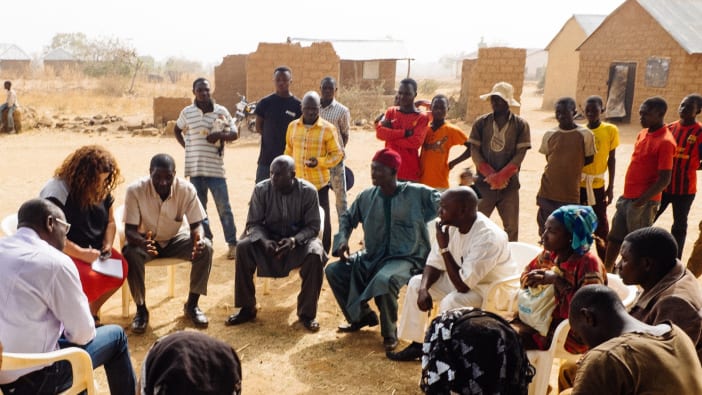
This budget should be agreed by representatives of the group. In an NGO or church, this could be the leadership team or governing body. In small community groups, the budget may be agreed by all the members of the group.
Payments
Put a system in place where payments need to be authorised by more than one person. This reduces the opportunity to misuse the funds. For example, a bank account could be set up where two signatures are needed on cheques.
Keep careful records
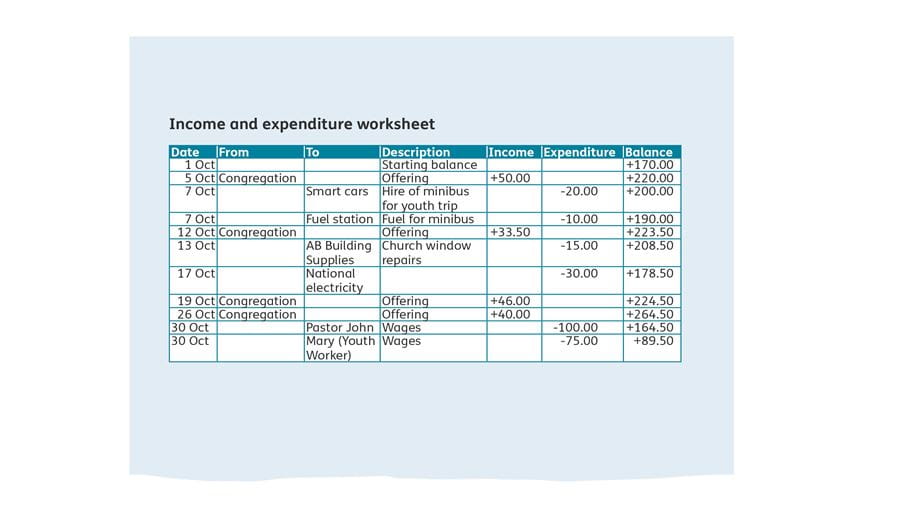
The treasurer should keep accurate and complete records of all financial transactions. These include income (money coming in), expenditure (money going out) and money that is borrowed by the organisation or loaned to others. These should be recorded at the time of receipt or payment to avoid confusion later on.
Supporting documents for every transfer of money should be kept in a secure place. Types of supporting document include invoices, receipts, an accounts book and bank statements. Receipts should be signed, marked with the organisation’s stamp or produced on official stationery. They should include the date, value and type of transaction. An accounts book contains information about all financial transactions.
Keep money safe
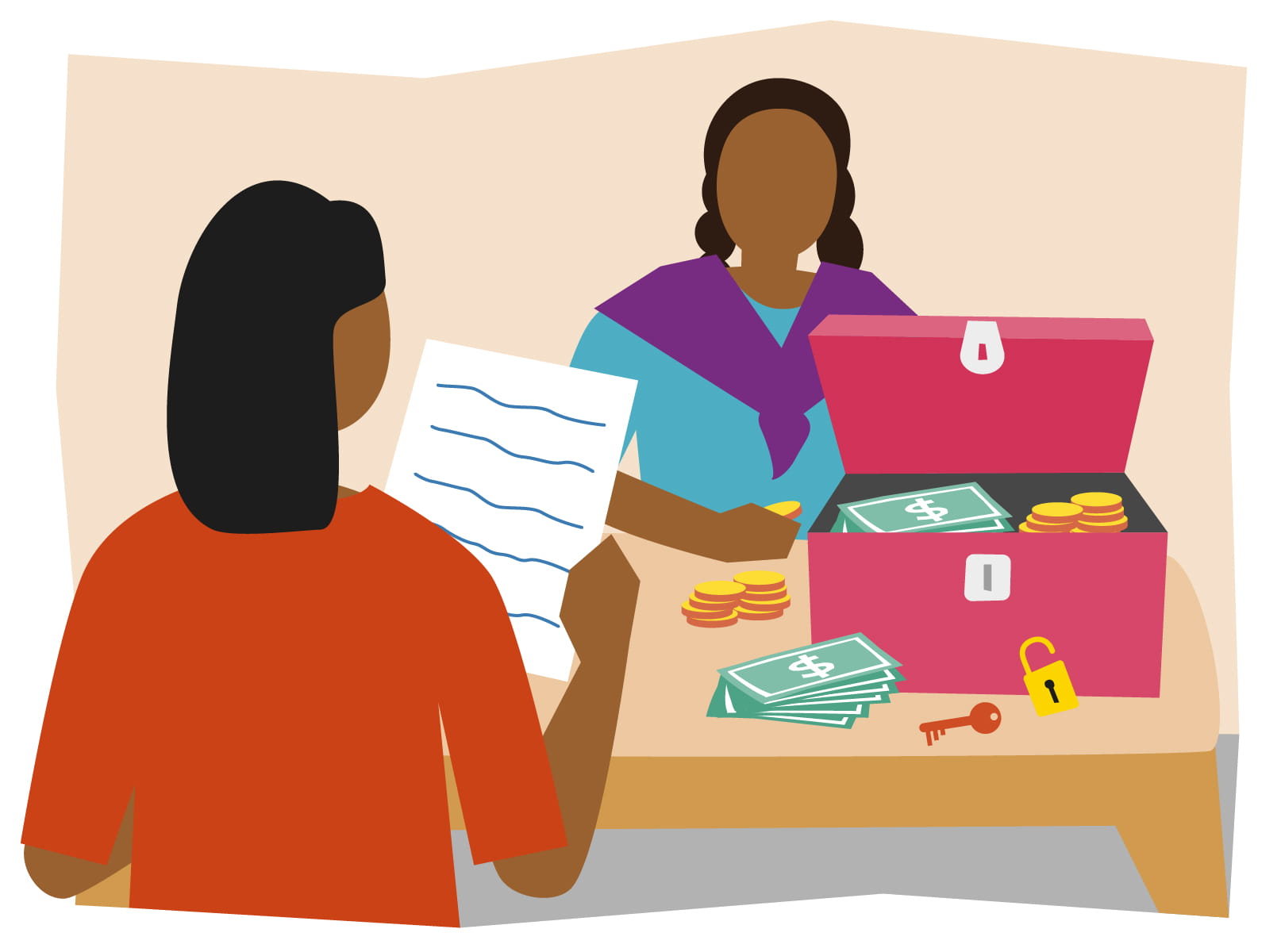
Keep money and records of financial transactions in a locked cupboard or cash box with only a few named keyholders. This protects the treasurer because the more people there are who can access the funds, the harder it is to keep track of the money, or ensure accurate records.
Financial administration tasks (such as counting money) should be carried out by more than one person to reduce error or the intentional misuse of funds.
Set up a bank account specifically for the fund. Take money that is not immediately needed to the bank as soon as possible, and obtain a receipt. Do not keep the money in someone’s personal bank account.
Monitor and produce reports
Check the accounts regularly, such as every month. If the treasurer overspends or spends the money on things that are not included in the budget, he or she can be held accountable. Likewise, questions should be asked if the treasurer spends less than the amount budgeted as this could mean that the group’s objectives are not being met.
At the end of the year, financial transactions should be the same as the amount budgeted, unless any changes have been approved by the wider group.
NGOs and churches with a large income should have their financial records audited every year by an independent accountant. The auditor checks all the records and will be able to identify any incomplete accounting or financial mismanagement.
Reports help to monitor progress against budget. They can help the treasurer show that the money has been used correctly, and are useful when raising money and reporting to donors.